


Advertisements
Are you looking for the best small business loans for minorities to boost your business?
The North American financial market offers excellent credit lines, each designed to meet a different profile of entrepreneur and sector of activity.
Advertisements
Now, which small business loans for minorities are most suitable for your needs? You will notice that some programs focus on the speed of microcredit aimed at startups.
In this article, we will explore the main small business loans for minorities alternatives to find the ideal financial solution.
We will help you compare the fundamental characteristics of each program, from interest rates to eligibility requirements, ensuring you have the necessary data to decide if the credit is suitable for your growth.
Discover the best small business loans for minorities options on the market
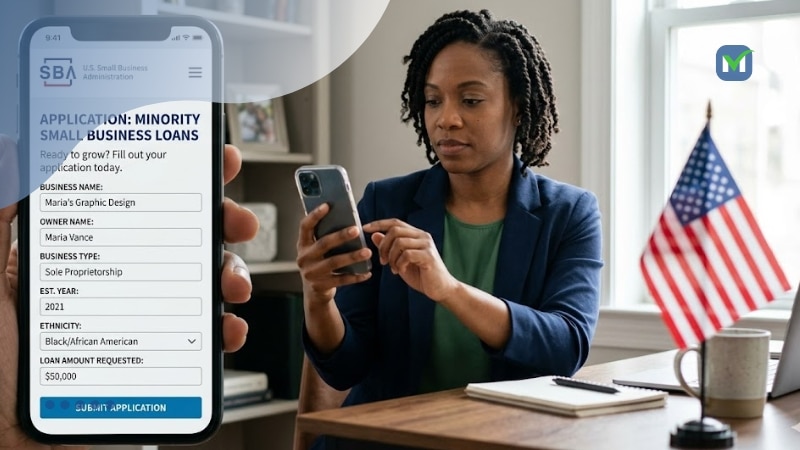
1. SBA 7(a)
The SBA 7(a) small business loans for minorities program continues to be the most powerful capitalization tool.
It works through a government guarantee where the SBA assures up to 85% of the amount for loans up to US$150,000 and 75% for higher amounts.
Advertisements
This reduces the bank’s risk and guarantees lower interest rates and extended repayment terms.
Furthermore, rates range between 9.75% and 14.75%, with terms of up to 25 years for real estate and 10 years for working capital.
2. SBA Community Advantage (Small business loans for minorities)
The SBA Community Advantage line is a crucial extension of the 7(a) program. Community lenders, such as non-profit organizations, provide financing directly to businesses in low-income communities.
Unlike traditional banks, these lenders prioritize the viability of the business plan and the creation of local jobs, rather than requiring only physical collateral.
Loan amounts reach US$ 350,000. In addition, the program imposes regulated interest rate caps to protect the borrower from abusive costs.
3. SBA Microloans
The SBA Microloans program supports startups and small operations that need limited capital. The initiative offers financing up to US$ 50,000, a vital resource to boost the start of your entrepreneurial journey.
In addition to credit, the borrower gains access to free training and management consulting.
This support assists entrepreneurs who have historically not accessed formal mentorship networks, balancing opportunities in the market.
In fact, interest rates range between 8% and 13%. This consolidates Microloans as a much cheaper alternative, surpassing commercial credit cards or high-risk online loans.
4. Accion Opportunity Fund (Small business loans for minorities)
The Accion Opportunity Fund predominantly serves minority groups. The organization stands out for technological integration and offers culturally sensitive support to its clients.
It is important to emphasize that Accion simplifies application processes and provides bilingual support. This option is ideal for businesses that already generate annual revenue above US$100,000.
Entrepreneurs access amounts ranging from US$5,000 to US$250,000. The fund applies fixed rates starting at 8.49% and does not charge penalties for early payment.
5. Business Consortium Fund
The Business Consortium Fund (BCF) finances Minority Business Enterprises (MBEs) that supply goods or services to large corporations or the government. You should know that the organization focuses on companies that have already signed contracts. They use these documents as collateral for the credit.
New borrowers access between US$25,000 and US$350,000. Clients with a solid history can obtain up to US$1 million.
Therefore, BCF offers the ideal solution to manage the long payment cycles imposed by large clients.
6. Indian Loan Program (Small business loans for minorities)
The Bureau of Indian Affairs manages this program focused on the economic development of Native Americans and Alaskans. The initiative guarantees up to 90% of the loan amount, which removes capital barriers in tribal lands with little physical collateral.
In this case, credit limits cater to different profiles: individuals can apply for up to US$500,000, while tribal enterprises access higher amounts. The state guarantee model ensures financial viability for large-scale projects in these communities.
Interest rates remain linked to US Treasury yields.
This controlled cost structure protects the borrower and ensures that financing drives community economic progress without overburdening the entrepreneur.
7. LiftFund
LiftFund operates in the Southern and Southwestern US.
The organization stands out for establishing municipal partnerships that subsidize capital. It is also relevant to know that LiftFund implements specific programs with 0% interest in cities like Fort Worth and Irving.
The organization proves aggressive in reducing the cost of credit for companies that have suffered recent economic impacts.
Loan amounts range from US$500 to US$1 million. LiftFund also offers terms of up to 15 years to finance real estate projects.
Follow this practical roadmap to secure your credit

1. Calculate your real repayment capacity (Small business loans for minorities)
Before looking for a lender, calculate exactly how much capital is needed and how it will generate return. Calculating the Debt Service Coverage Ratio (DSCR) is mandatory.
Lenders in 2026 look for a ratio of at least 1.20x to 1.25x.
If the company does not show that at least 20% profit remains after paying the installment, approval becomes unlikely.
2. Organize your personal and business credit history
Even for established companies, the personal credit of the partners is examined.
The standard for approval in traditional banks is a minimum score of 680. Community institutions may consider scores starting at 600.
We recommend obtaining copies of the reports and correcting errors before starting the application to avoid automatic rejections.
3. Gather all the company’s financial documentation (Small business loans for minorities)
Disorganization is a frequent reason for denial.
Your loan package must contain tax returns from the last 3 years, accumulated profit and loss statements, balance sheets, and recent bank statements.
Also include a schedule of current debts to give the credit analyst full transparency.
4. Present a business plan with realistic projections
The business plan acts as your main sales pitch. Detail the market analysis and the management team’s curriculum.
Realistic financial projections for the next 3 to 5 years show the lender that you have a clear vision of how the capital will be employed for sustainable growth.
5. Choose the bank with the Preferred Lender seal
Prioritize banks with SBA Preferred Lender (PLP) status.
These banks have the authority to make final decisions without consulting SBA headquarters, which significantly reduces the closing time.
Digital lender search tools facilitate connection with institutions that already have a history of supporting minority businesses.
6. Respond quickly to risk analysts (Small business loans for minorities)
After submission, the speed in responding to requests for additional information is vital. In 2026, any delay in document delivery can restart the analysis cycle.
Maintain constant contact with the analyst and provide precise clarifications to speed up the disbursement of capital.
7. Finalize the contract and receive the funds in the account
If approved, you will receive a Commitment Letter. After accepting the rates and conditions, the legal closing occurs.
Funds usually land in the account via bank transfer within 14 days.
Verify if there are requirements for encumbrances on company assets or personal guarantees before signing the final contract.
Conclusion
Today, entrepreneurs secure access to small business loans for minorities through rigorous technical preparation.
Success demands mastering metrics like the DSCR and maintaining impeccable credit reports.
Options vary: the market offers everything from federal guarantees of the SBA 7(a) to zero-interest innovations from community institutions.
It is worth noting that the financial scenario, despite disparities, has democratized access to compensation tools. The choice of credit is not limited to the immediate value, but defines the sustainable cost of long-term growth.
Do not wait for the need for capital to become urgent. Organize your financial dossier today. Seek an SBA Preferred Lender to secure the future and growth of your business.
An interesting point is how you will pay off the credit? We recommend learning now how to consolidate payday loans.